
Is your Warehouse Layout Up to Date? Receive an Updated Layout in 2 Weeks.
Blog
February 2, 2026
CES Recap: Supply Chain as a Customer Experience Driver with Walmart
By: Stephan Lauzon, Partner
Updated: February 4, 2026 | 3 Minute Read
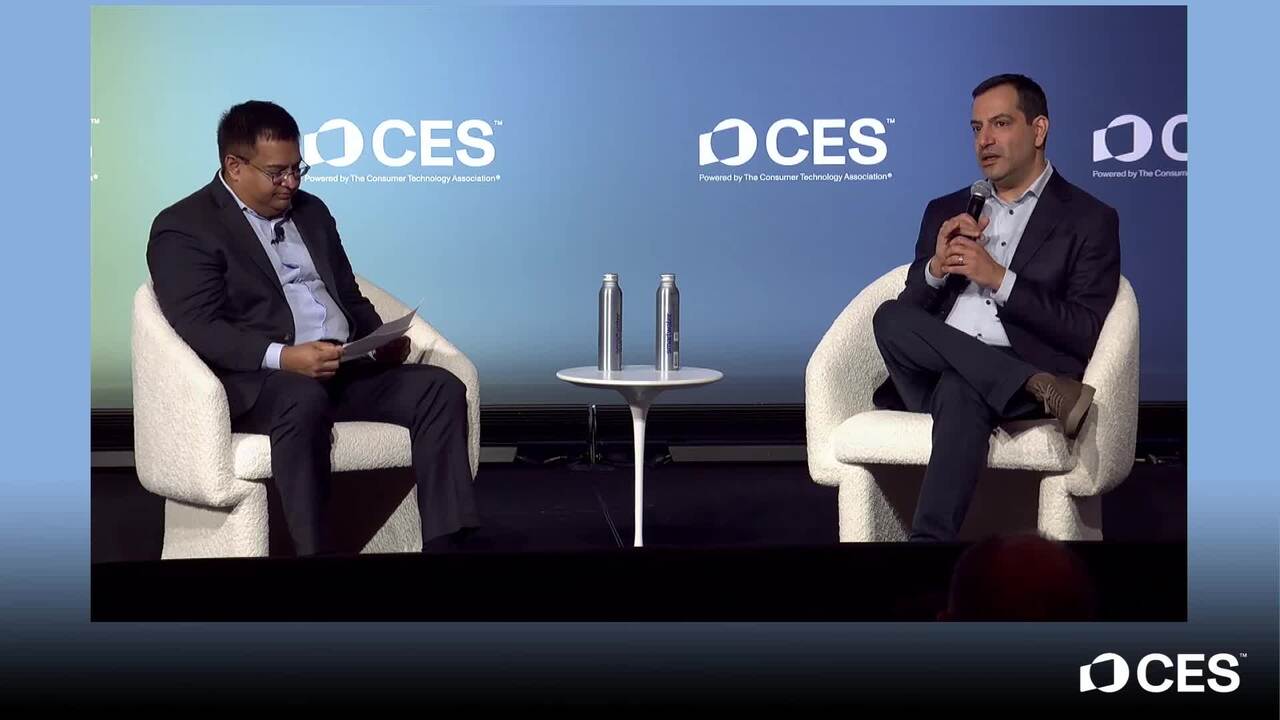
At CES, I sat down for a fireside chat between Daniel Danker, Walmart’s EVP of Artificial Intelligence and Rajeev Chand of Wing Venture Capital. The big question on the table was: What does Walmart look like in ten years’ time?
His answer didn’t focus only on what we usually expect to drive better shopping, from flashier stores or better websites, but rather a total shift in how we think about moving goods. In ten years, his vision places supply chain as much more than the back office; it’ll be the main driver of the customer experience.
From Scrolling to Precision
Walmart’s vision for their stores in the next ten years is all about moving away from endless searching as a means of saving time. Today, we search for items; tomorrow, the system will understand the intent and plan accordingly. When a customer starts choosing items that clearly relate to one another, the system can understand what they’re trying to do and automatically suggest what they’ll need next. This saves the customer time, reduces extra searching, and makes the whole experience feel smoother and more intuitive.
This level of customization changes the goal of the warehouse:
- Precision over Depth: We won’t need a massive depth of every possible product. We’ll need the exact right items for a specific person, picked and delivered efficiently.
- Agentic Commerce: AI in our WMS and ERP systems will act more like a partner than a database, helping make decisions on the fly to get products to porches faster.
- Predictive Replenishment: Imagine your laundry detergent showing up exactly when you’re down to the last scoop because the system understands your household’s pace.
The Human-Tech Synergy
The most interesting part of the talk for me was the focus on input systems. Robots by themselves won’t change the game; it’s the vision, voice, and sensory data they use that matters. These “senses” allow the tech to handle the mundane tasks, leaving humans to handle the judgment calls that machines still can’t touch.
The real challenge for us in the industry is balancing efficiency with precision. It’s one thing to move millions of identical units; it’s another to move smaller quantities of very specific preferences without losing speed.
Looking Ahead
In this imagined future, the “supply chain” will essentially be a customization engine. It’s a shift from recommending products to knowing exactly what a customer needs and having it ready before they even ask.
For those of us designing warehouses and networks of today, the goal is clear: we aren’t just building for volume anymore. We’re building for the data-driven precision that makes shopping feel less like a chore and more like a service.
Stephan is a Partner in Consulting at LIDD, working out of our Montreal and Los Angeles offices to help clients navigate complex challenges and achieve strategic success. With a long and diverse career in warehousing and supply chain management, Stephan brings valuable expertise to LIDD’s Consulting and Technology practices.
Related Posts
Blog
Lost in the Algorithm: Prioritizing Natural Intelligence in the AI Era
In the rush to embrace AI, are we overlooking the irreplaceable value of human ingenuity? This article explores the importance of Natural Intelligence in supply chain innovation, highlighting its unique strengths and how it can work in tandem with AI for optimal results.
Blog
The Human Connection in an Age of Automation: A Look Ahead at ADM Pack Ex Toronto
The supply chain world is abuzz with the promise of automation. As we race towards a more future, are we at risk of losing the human element?
Blog
Beyond the Hardware: The Data Revolution in Supply Chain at CES 2026
Data backend and the software intelligence that are finally turning machinery into an integrated, sentient supply chain: Learn some of Stephan’s biggest takeaways from CES 2026.